
The Dreame L-series spans four consumable kit generations, each requiring parts that are not interchangeable between groups. The RAK28 generation covers the L20 Ultra and L30 Ultra with dual-rotary MopExtend pads and a hot-water dock wash. The RAK35 generation covers the L10s Pro Ultra, L10s Ultra Gen2, and L30 Ultra S on the DuoScrub platform. The RAK49 range spans 11,000 to 30,000 Pa from the L30s Ultra through the L60 Ultra FE with liftable flat mop arms. The RAK59 range covers the L10 Ultra Gen2 through the L60 Ultra PE with ProLeap and EasyLeap chassis systems. This guide covers component service intervals, a full model comparison, and replacement schedules across all four generations.
Why Dreame L-series robots need more frequent maintenance
A suction range from 7,000 to 30,000 Pa sets vastly different filter loading rates within the same series name
The L-series name covers robots at radically different performance tiers. At 7,000 Pa on the L20 Ultra and 7,300 Pa on the L30 Ultra, the filter loads at a steady residential rate and a three-to-six-month replacement interval is realistic under daily use. At 11,000 Pa on the L30s Ultra, L40 Ultra, and L10 Ultra Gen2, that interval compresses to two to three months under typical residential use. At 19,000 to 19,500 Pa across the L40s and L50 families, the filter shifts from white to mid-grey within two to three months. At 25,000 Pa on the L40 Ultra Gen2 and L10s Ultra Gen3, and at 30,000 Pa on the L60 Ultra FE, two months is a firm ceiling rather than a guideline. Identifying your model’s suction tier is the first step to setting the correct maintenance cadence, because a schedule calibrated for the 7,000 Pa generation will substantially underservice a 25,000 Pa robot even though both carry the L-series name.
Four mop architectures produce distinct pad wear patterns that the dock wash cannot fully reverse
The RAK28 L20 Ultra and L30 Ultra use dual rotary MopExtend spinning discs, where the right-hand pad is actively driven outward along wall edges, accelerating outer-edge fibre wear and making matched-pair replacement the correct approach rather than replacing pads individually. The RAK35 models including the L10s Pro Ultra and L10s Ultra Gen2 use the DuoScrub twin rotary system, where both pads spin and the outer circumference of each disc wears before the centre. The RAK49 models including the L40 Ultra, L30s Ultra, and L50 Ultra AE use a liftable flat mop arm; the pivot joint and guide rails accumulate debris the dock wash cannot reach and require monthly attention regardless of dock generation. The RAK59 models including the L50 Ultra, L50s Ultra, and L60 Ultra PE use extending dual spinning pads that press outward during wall-edge passes, generating concentrated outer-edge wear similar to the RAK28 system but within a higher-frequency daily hot-wash dock environment.
ProLeap and EasyLeap chassis mechanisms collect debris at pivot points and wheel wells
The L50 Ultra, L50 Pro Ultra, L50s Ultra, L50s Pro Ultra, and L60 Ultra PE use the ProLeap retractable-leg system, which extends to climb obstacles up to 6 cm and accumulates hair and grit at its pivot points during everyday floor transitions. The L40s Ultra and L40s Pro Ultra use the EasyLeap four-wheel system for thresholds up to 4 cm, collecting debris at the wheel wells rather than pivot joints. In both cases, a robot that previously cleared a door threshold cleanly and then begins to high-centre is almost always showing a partially jammed pivot or packed wheel well rather than a mechanical fault. Monthly clearing of these points takes under a minute and prevents the more visible failure of a robot that can no longer cross a threshold it previously handled without issue.
The AceClean DryBoard dock generation carries additional nozzle and dock-filter maintenance absent from standard docks
Models using the AceClean DryBoard dock, including the L10s Ultra Gen3, L50 Ultra AE, and L60 Ultra FE in the RAK49 range, carry a 20-nozzle wash chamber with a detachable internal dock filter. Monthly inspection of all 20 outlets replaces the single-nozzle wipe used on standard dock models, and the internal dock filter requires rinsing every two weeks and replacement every three months. In hard-water areas, partial blockage of even a few outlets produces uneven wash coverage and pads that return to the floor incompletely cleaned. L50 models in the RAK59 range with the AceClean DryBoard additionally accumulate lint on the dry-board surface from the extending dual spinning pads, requiring a monthly wipe that single-temperature docks do not need.
Models in this series compared
| Model | Suction | Mop system | Dock | Brush type |
|---|---|---|---|---|
| L20 Ultra | 7,000 Pa | Dual rotary MopExtend | 70°C hot-water wash, 4.5L clean tank, 2h warm-air dry | Rubber roller |
| L20 Ultra Complete | 7,000 Pa | Dual rotary MopExtend | 70°C hot-water wash, 4.5L clean tank, 2h warm-air dry | TriCut |
| L30 Ultra | 7,300 Pa | Dual rotary MopExtend | 58 to 75°C wash, 4.5L clean tank, 2h warm-air dry | Rubber roller |
| L30 Ultra Complete | 7,300 Pa | Dual rotary MopExtend | 58 to 75°C wash, 4.5L clean tank, 2h warm-air dry | TriCut |
| L10s Pro Ultra | — | DuoScrub twin rotary, liftable | All-in-one: auto-empty, mop wash, air dry | Dual anti-tangle rubber |
| L10s Pro Ultra Heat | — | DuoScrub twin rotary, liftable | All-in-one: auto-empty, heated mop wash, air dry | Dual anti-tangle rubber |
| L10s Ultra Gen2 | — | DuoScrub twin rotary, liftable | All-in-one: auto-empty, mop wash, air dry | Dual anti-tangle rubber |
| L30 Ultra S | — | DuoScrub, slim chassis | All-in-one: auto-empty, mop wash, air dry | Dual anti-tangle rubber |
| L40 Ultra AE | — | DuoScrub, liftable | All-in-one: auto-empty, mop wash, air dry | Dual anti-tangle rubber |
| L40 Ultra CE | — | DuoScrub, liftable | All-in-one: auto-empty, mop wash, air dry | Dual anti-tangle rubber |
| L40s Ultra AE | — | DuoScrub, liftable | All-in-one: auto-empty, mop wash, air dry | Dual anti-tangle rubber |
| L40s Ultra CE | — | DuoScrub, liftable | All-in-one: auto-empty, mop wash, air dry | Dual anti-tangle rubber |
| L10s Ultra Gen3 | 25,000 Pa | DuoScrub dual-rotating | AceClean DryBoard, 20 nozzles, 4.2L bag, hot-air dry | TriCut |
| L30s Ultra | 11,000 Pa | MopExtend RoboSwing arm | Single nozzle 65°C, 3.2L bag, hot-air dry | Standard roller |
| L30s Pro Ultra | 11,000 Pa | MopExtend flat liftable | Auto-fill, single nozzle 65°C, 3.2L bag, hot-air dry | Standard roller |
| L40 Ultra | 11,000 Pa | Flat liftable | Single nozzle 65°C, 3.2L bag, hot-air dry | Standard roller |
| L40 Ultra Gen2 | 25,000 Pa | Flat liftable | Single nozzle 65°C, 3.2L bag, hot-air dry | TriCut |
| L50 Ultra AE | 19,500 Pa | Flat liftable | AceClean DryBoard, 20 nozzles, 3.22L bag, hot-air dry | DuoBrush HyperStream |
| L60 Ultra FE | 30,000 Pa | Flat liftable | AceClean DryBoard, 20 nozzles, Dual Flex Arm side brush | TriCut |
| L10 Ultra Gen2 | 11,000 Pa | Extending pad | 80°C hot wash, hot-air dry | Standard roller |
| L40s Ultra | 19,000 Pa | Extending pad, 4 cm reach | EasyLeap, 80°C hot wash, 3.2L bag, hot-air dry | Standard roller |
| L40s Pro Ultra | 19,000 Pa | Extending pad, 4 cm reach | EasyLeap, 80°C hot wash, 3.2L bag, hot-air dry | Standard roller |
| L50 Ultra | 19,500 Pa | Extending dual spinning pads | ProLeap, AceClean DryBoard 4 temps, 3.2L bag | Standard roller |
| L50 Pro Ultra | 19,500 Pa | Extending dual spinning pads | ProLeap, AceClean DryBoard 4 temps, 3.2L bag | Standard roller |
| L50s Ultra | 19,500 Pa | Extending dual spinning pads | ProLeap, AceClean DryBoard 4 temps, 3.2L bag | Standard roller |
| L50s Pro Ultra | 19,500 Pa | Extending dual spinning pads | ProLeap, AceClean DryBoard 4 temps, 3.2L bag | Standard roller |
| L60 Ultra PE | 20,000 Pa | Extending dual spinning pads | ProLeap, 80°C hot wash, 3.2L bag, hot-air dry | Standard roller |
RAK28 generation: L20 Ultra and L30 Ultra
The L20 Ultra and L20 Ultra Complete run at 7,000 Pa with dual rotary MopExtend spinning discs and a 70°C hot-water dock wash across a 4.5-litre clean-water tank. The L30 Ultra and L30 Ultra Complete lift suction to 7,300 Pa and expand the dock wash temperature range to between 58°C and 75°C. All four models use the RAK28 consumables kit. The Complete variants ship with the TriCut anti-tangle roller as the installed main brush rather than the standard rubber roller, which extends brush replacement from six months toward twelve months under daily use. The RLX41CE is the regional retail code for a specific L-series RAK28 configuration in selected markets and follows the same maintenance cadence as whichever L20 or L30 Ultra variant matches its local documentation.
RAK35 generation: L10s Pro Ultra, L10s Ultra Gen2, L30 Ultra S, and regional L40 and L40s variants
The L10s Pro Ultra, L10s Pro Ultra Heat, and L10s Ultra Gen2 share the RAK35 consumable set with the Dreame D Ultra and Mova E-series platforms. All use the DuoScrub twin rotary mop system with a liftable pad carrier and an all-in-one dock providing auto-empty, mop pad wash, and warm-air drying. The L10s Pro Ultra Heat adds heated pad drying to the dock cycle. The L30 Ultra S uses the same RAK35 consumable architecture in a slim chassis form factor. The L40 Ultra AE, L40 Ultra CE, L40s Ultra AE, and L40s Ultra CE are regional market variants of the L40 Ultra and L40s Ultra platforms configured for the RAK35 consumable family rather than the RAK49 or RAK59 kits used by their nearest-named counterparts. Additional regional retail codes DREL10SPUH, RLD31SE, RLD52SE, RLD52SE-1, and RLD52SE-2 also carry the RAK35 consumable kit and follow the maintenance schedule of the RAK35 DuoScrub platform in their respective markets.
RAK49 generation: L10s Ultra Gen3, L30s Ultra, L40 Ultra, L50 Ultra AE, and L60 Ultra FE
The RAK49 generation spans the widest suction range within a single consumable kit, from 11,000 Pa on the L40 Ultra, L30s Ultra, and L30s Pro Ultra, to 19,500 Pa on the L50 Ultra AE, 25,000 Pa on the L40 Ultra Gen2 and L10s Ultra Gen3, and 30,000 Pa on the L60 Ultra FE. All seven models share the same RAK49 consumables and all use a liftable flat mop arm. The dock generation varies: the L40 Ultra, L40 Ultra Gen2, L30s Ultra, and L30s Pro Ultra use a single 65°C spray nozzle; the L10s Ultra Gen3, L50 Ultra AE, and L60 Ultra FE use the AceClean DryBoard 20-nozzle system. Brush type also varies: the L40 Ultra Gen2, L10s Ultra Gen3, and L60 Ultra FE use TriCut; the L50 Ultra AE uses the DuoBrush HyperStream; and the remainder use the standard roller. Regional retail codes RLL43SE, RLL51SE, RLL53SE, RLX53SE, RLX53SE-1, RLX63CE, RLX63CE-2, RLX63CE-4, RLX63CE-6, and RLX73CE all use the RAK49 kit and follow the same maintenance schedules as the named model they correspond to in a given market.
RAK59 generation: L10 Ultra Gen2, L40s Ultra, L50 Ultra family, and L60 Ultra PE
The RAK59 generation opens at 11,000 Pa with the L10 Ultra Gen2 on a standard low-profile chassis, then steps to 19,000 Pa on the L40s Ultra and L40s Pro Ultra with the EasyLeap chassis, and 19,500 Pa on the L50 Ultra, L50 Pro Ultra, L50s Ultra, and L50s Pro Ultra with the ProLeap chassis. The L60 Ultra PE sits at 20,000 Pa with the ProLeap chassis and a standard 80°C dock rather than the AceClean DryBoard used on the L50 family. All eight models share the RAK59 consumables kit and a 3.2-litre sealed dock dustbag. Regional retail codes RLL22SE, RLL74CE, RLL74CE-1, RLL84CE, RLL88HE, RLL89HE, RLL94CE, RLX83LE, RLX84LE, RLX85CE, RLX85CE-1, RLX85CE-2, RLX85CE-3, RLX85CE-4, RLX85CE-5, RLX85CE-6, RLX85CE-7, RLX86CE, RLX86CE-1, RLX93CE, RLX94CE, and RVL75DE all use the RAK59 kit and follow the maintenance schedule of the named RAK59 model they correspond to in a given market.
Replacement parts and service intervals
Main brush roll
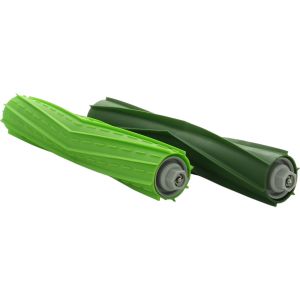
Clean the brush roll every one to two weeks across all L-series models. The cleaning method depends on the brush type fitted. For standard rubber rollers on the L40 Ultra, L30s Ultra, L30s Pro Ultra, L10 Ultra Gen2, L40s Ultra, L40s Pro Ultra, and all L50 models, service means cutting hair along the full roll length, clearing both end-cap bearing holes with a toothpick, and removing any debris from the brush chamber. Replace every five to seven months under daily use. For TriCut models including the L40 Ultra Gen2, L10s Ultra Gen3, L60 Ultra FE, L20 Ultra Complete, and L30 Ultra Complete, add clearing of the three integrated cutting channels at every fortnightly service; these channels accumulate compressed hair that restricts airflow through the brush housing without being visible from outside. Replace TriCut rollers at six months in pet households. For the L50 Ultra AE with the DuoBrush HyperStream, clear the junction between the bristled rubber element and the TPU element at each fortnightly service, as hair migrates to that line and compresses over time. For RAK35 models including the L10s Pro Ultra, L10s Pro Ultra Heat, L10s Ultra Gen2, L30 Ultra S, and regional L40 and L40s variants, the dual anti-tangle rubber roller channels hair away from the end caps, but fine hair compacts at both bearing seats over time and requires clearing with a toothpick every one to two weeks. Replace every six to twelve months; in pet households replace at the six-month mark as the rubber surface takes a permanent set after sustained fine-fibre contact.
HEPA filter
Clean the filter every one to two weeks on RAK49, RAK59, and RAK35 models by tapping all four sides of the filter frame firmly over a waste bin. The RAK49 filter is not water-washable; Dreame states this explicitly for the L-series RAK49 filter. At 11,000 Pa on the L40 Ultra, L30s Ultra, and L30s Pro Ultra, replace every two to three months. At 19,500 Pa on the L50 Ultra AE, replace every two to three months. At 25,000 Pa on the L40 Ultra Gen2 and L10s Ultra Gen3, and at 30,000 Pa on the L60 Ultra FE, replace every two months. For RAK59 models, the filter is also not washable: replace every three months or more on the L10 Ultra Gen2 at 11,000 Pa, and every two to three months on the L40s Ultra and L40s Pro Ultra at 19,000 Pa and the L50 family and L60 Ultra PE at 19,500 to 20,000 Pa. The visual replacement cue across all non-washable models is a consistent mid-grey shift across the pleat faces. For RAK28 models, the filter is washable: tap it every one to two weeks, rinse under cold running water once a month, and allow it to dry for a minimum of 24 hours before reinstalling. Replace the RAK28 filter every three to six months. Reinstalling any damp filter restricts airflow and adds thermal load to the motor regardless of generation.
Mop pads
The dock hot-wash cycle handles daily hygiene but does not reverse the physical degradation of pad fibres. For RAK28 models, the dual rotary MopExtend pads should be replaced as a matched pair every one to three months. The right-hand pad wears faster than the left because MopExtend drives it outward along wall edges on every pass; replacing individually creates uneven mopping pressure. Inspect both pads at two months and replace when the outer-edge fibre feels compressed or shorter than the centre. For RAK35 models including the L10s Pro Ultra and regional L40 and L40s variants, the DuoScrub rotary pads follow the same matched-pair replacement logic; inspect at two months and replace both regardless of which disc appears more worn. For RAK49 models with flat liftable pads, the L40 Ultra and L40 Ultra Gen2 warrant inspection at two to three months; the L30s Ultra and L30s Pro Ultra with the MopExtend arm warrant inspection at six weeks because the swing arc accelerates outer-edge wear; the L10s Ultra Gen3 with dual-rotating DuoScrub pads warrants inspection at six weeks due to the added mechanical wear from rotation. For RAK59 models with extending dual spinning pads on the L50 Ultra, L50s Ultra, and L60 Ultra PE, inspect at eight weeks. A pad that has stiffened, lost surface nap, or shows persistent discolouration after a dock wash is redistributing soiling rather than removing it and needs replacing regardless of the interval elapsed.
Side brush
Inspect the side-brush post weekly on all models and remove any thread or hair that has wrapped around the base using a toothpick. Replace every three to six months, or sooner if the bristles have splayed outward or lost their contact angle with the wall edge. A side brush past its effective service life no longer redirects edge debris toward the main brush roll, causing cleaning misses that can appear to be a navigation problem but are a worn consumable. The L60 Ultra FE uses a Dual Flex Arm extending side brush; inspect the flex arm joint separately from the brush post at each weekly check, as the joint accumulates hair and debris independently. On the L40s Ultra and L40s Pro Ultra, the extending side-brush rail should be wiped monthly; grit in the rail prevents the brush from reaching its full 4 cm outreach along skirting boards, producing a missed edge strip that looks like a navigation change.
Dock dustbag
The auto-empty dock transfers the robot’s full dustbin contents after every docking cycle, so the bag accumulates material faster than a manually-emptied robot. On RAK49 models with 3.2-litre bags including the L40 Ultra, L40 Ultra Gen2, L30s Ultra, and L30s Pro Ultra, replace every three to five weeks under daily use. On the L10s Ultra Gen3 with its 4.2-litre bag, replace every four to six weeks. On the L50 Ultra AE with the 3.22-litre bag, replace every four to six weeks. RAK59 sealed 3.2-litre bags across the L40s Ultra, L50 Ultra, and all other RAK59 models are rated by Dreame for up to 100 days but reach replacement in four to six weeks under daily use in homes with shedding pets. The RAK28 L20 Ultra and L30 Ultra generation uses a 3.2-litre bag that typically needs replacement every six to eight weeks under daily use. A full dock bag prevents the auto-empty cycle from completing, causing the robot to begin the next session with a full onboard dustbin and measurably reduced cleaning capacity.
Dock dirty-water tank and spray nozzles
Empty and rinse the dirty-water tank every two to three days on all models. For single-nozzle dock models including the L40 Ultra, L40 Ultra Gen2, L30s Ultra, and L30s Pro Ultra, wipe the nozzle outlet monthly and descale in hard-water areas when wash pressure appears reduced. For AceClean DryBoard models including the L10s Ultra Gen3, L50 Ultra AE, and L60 Ultra FE, inspect all 20 nozzle outlets monthly for limescale and rinse the detachable dock internal filter every two weeks, replacing it every three months. For RAK59 models with the AceClean DryBoard including the L50 Ultra, L50s Ultra, and related models, wipe the dock spray nozzles and wash-board surface monthly, or every two to three weeks in hard-water regions, and wipe the dry-board surface to remove lint build-up. For RAK28 and RAK35 models, empty the dirty-water tank after every session in high-frequency use, and wipe the dock spray nozzles monthly.
Chassis moving parts
On ProLeap-equipped models including the L50 Ultra, L50 Pro Ultra, L50s Ultra, L50s Pro Ultra, and L60 Ultra PE, wipe the leg pivot points monthly and confirm both legs deploy freely through their full travel. On EasyLeap-equipped L40s Ultra and L40s Pro Ultra, clear the wheel wells monthly instead. On all RAK49 models with the liftable mop arm, wipe both guide rails and the pivot joint monthly with a dry cloth and confirm the arm travels freely to its full height. A stiff or partially obstructed lift rail causes the mop pad to contact carpet edges during transitions and deposit moisture that over time produces odour and potential subfloor damage.
Battery
All Dreame L-series models use a sealed Li-ion battery with a capacity that varies by generation and chassis: approximately 5,200 mAh on RAK28 and RAK35 models, and between 5,200 and 6,400 mAh on RAK49 and RAK59 models depending on the chassis size. Under daily use the battery delivers reliable runtime for two to three years before capacity degradation becomes noticeable. The practical replacement signal is a runtime that falls below approximately 70 to 80 minutes on a full charge during a standard 100 square-metre cleaning session, particularly if the robot has begun interrupting sessions to return for mid-cycle recharging when it previously completed the same area without stopping. Keep the dock charging contacts clean by wiping them monthly with a dry cloth; a film of dust or oxidation on either the robot or dock contacts adds resistance and produces incomplete charging cycles that can be mistaken for battery failure. Do not store the robot with a fully depleted charge for extended periods, as deep discharge accelerates irreversible capacity loss. Battery replacement is a specialist procedure on most L-series models and is not a consumer-serviceable task; if runtime declines below the threshold above, request a battery replacement from a Dreame service partner.
Maintenance at a glance
| Component | Clean | Replace |
|---|---|---|
| Main brush roll, standard roller (RAK49 11,000 Pa; RAK59; RAK35 models) | Every 1 to 2 weeks | Every 5 to 7 months |
| Main brush roll, TriCut (L40 Ultra Gen2, L10s Ultra Gen3, L60 Ultra FE, L20 Ultra Complete, L30 Ultra Complete) | Every 1 to 2 weeks incl. cutting channels | Every 6 months |
| Main brush roll, DuoBrush HyperStream (L50 Ultra AE) | Every 1 to 2 weeks incl. element junction | Every 6 months |
| Main brush roll, dual anti-tangle rubber (RAK35 models) | Every 1 to 2 weeks | Every 6 to 12 months |
| Main brush roll, RAK28 rubber roller (L20 Ultra, L30 Ultra) | Every 1 to 2 weeks | Every 6 to 12 months |
| HEPA filter, RAK49 11,000 Pa and 19,500 Pa (not washable) | Every 2 weeks (tap only) | Every 2 to 3 months |
| HEPA filter, RAK49 25,000 Pa and 30,000 Pa (not washable) | Every 2 weeks (tap only) | Every 2 months |
| HEPA filter, RAK59 L10 Ultra Gen2 at 11,000 Pa (not washable) | Every 1 to 2 weeks (tap only) | Every 3 months or more |
| HEPA filter, RAK59 L40s and L50 family at 19,000 to 20,000 Pa (not washable) | Every 1 to 2 weeks (tap only) | Every 2 to 3 months |
| HEPA filter, RAK28 (L20 Ultra, L30 Ultra, washable) | Tap every 1 to 2 weeks; rinse monthly, dry 24 h | Every 3 to 6 months |
| Mop pads, RAK28 dual rotary MopExtend (as matched pair) | Auto-washed by dock | Every 1 to 3 months |
| Mop pads, RAK35 DuoScrub rotary (as matched pair) | Auto-washed by dock | Every 2 to 3 months, always in pairs |
| Mop pads, RAK49 flat liftable (L40 Ultra, L40 Ultra Gen2, L50 Ultra AE, L60 Ultra FE) | Auto-washed by dock | Inspect at 2 to 3 months |
| Mop pads, RAK49 MopExtend arm (L30s Ultra, L30s Pro Ultra) | Auto-washed by dock | Inspect at 6 weeks |
| Mop pads, RAK49 DuoScrub (L10s Ultra Gen3) | Auto-washed by dock | Inspect at 6 weeks |
| Mop pads, RAK59 extending dual spinning (L50 Ultra, L50s Ultra, L60 Ultra PE) | Auto-washed by dock | Inspect at 8 weeks |
| Side brush, all models | Inspect weekly; extending rail (L40s) monthly | Every 3 to 6 months |
| Dock dustbag, 3.2 L RAK49 standard models | — | Every 3 to 5 weeks |
| Dock dustbag, 4.2 L RAK49 L10s Ultra Gen3 | — | Every 4 to 6 weeks |
| Dock dustbag, 3.22 L RAK49 L50 Ultra AE | — | Every 4 to 6 weeks |
| Dock dustbag, 3.2 L RAK59 models | — | Every 4 to 6 weeks under daily use |
| Dock dustbag, 3.2 L RAK28 models | — | Every 6 to 8 weeks under daily use |
| Dock dirty-water tank, all models | Every 2 to 3 days | — |
| Dock nozzle, single (L40 Ultra, L40 Ultra Gen2, L30s Ultra, L30s Pro Ultra) | Monthly; descale in hard water | — |
| Dock nozzles, 20-nozzle AceClean (L10s Ultra Gen3, L50 Ultra AE, L60 Ultra FE; L50 RAK59) | Inspect monthly; dock internal filter rinse every 2 weeks | Dock internal filter every 3 months |
| Mop lift arm rails and pivot joint (all RAK49 liftable arm models) | Monthly | — |
| ProLeap leg pivots (L50 Ultra, L50 Pro Ultra, L50s Ultra, L50s Pro Ultra, L60 Ultra PE) | Monthly | — |
| EasyLeap wheel wells (L40s Ultra, L40s Pro Ultra) | Monthly | — |
| DuoScrub mop lift arm pivots (RAK35 models) | Monthly | — |
Common problems and their maintenance causes
Suction noticeably weaker than usual
On all L-series models, a clogged filter is the first cause to check. Remove and inspect the pleat faces: on RAK49 and RAK59 models a shift to consistent mid-grey means replace, not tap-clean. If the filter looks clean, check the brush roll area and the suction inlet inside the dustbin for a partial blockage. On TriCut models including the L40 Ultra Gen2, L10s Ultra Gen3, and L60 Ultra FE, check whether the TriCut cutting channels have become packed with compressed hair, as blocked channels restrict airflow through the brush housing even when the outside of the roll looks clean. On RAK28 and RAK35 models, confirm the filter is dry before reinstalling if it was recently rinsed; a damp filter restricts airflow identically to an over-saturated one.
Mop leaving damp patches at carpet edges or on transitions
The liftable mop arm is not reaching its full travel height. On RAK49 models, inspect both guide rails and the pivot joint for accumulated dust and hair and wipe them clean with a dry cloth. Confirm in the app that carpet detection is active and set to the maximum lift height for your carpet type; firmware updates occasionally revert this setting. On RAK35 models including the L10s Pro Ultra and L40 Ultra AE, wipe both pivot arms and the carrier guide rails on the DuoScrub carrier. If the rail surface shows visible scoring or the pivot arm appears damaged after cleaning, the lift mechanism needs inspection before the robot is restarted.
Persistent unpleasant smell from mop pads after the dock wash
The dock spray nozzle is partially blocked, or the pad itself has reached end of life. On single-nozzle models, wipe and descale the nozzle outlet. On AceClean DryBoard models, check all 20 outlets for limescale and rinse the dock internal filter. If all nozzles are clear and the smell continues, the pad has embedded soiling the wash cycle cannot remove and needs replacing. The L10s Ultra Gen3 and L60 Ultra FE are particularly prone to pad odour if the dock internal filter goes uncleaned beyond its three-month interval, as a clogged dock filter reduces wash water flow across all 20 nozzles simultaneously. On RAK28 models, also check that the dirty-water tank has been rinsed within the last two to three days and that the nozzles on the dock base are clear.
Auto-empty does not complete or the robot returns to dock already full
The dock bag is at capacity, or the suction channel between the dock collar and the robot’s dustbin port is blocked by compacted fine dust. Replace the dock bag first. If the problem continues, wipe the docking port at the base of the robot and the dock collar clean. Fine dust builds up around the port over repeated docking cycles and degrades the seal quality needed for effective auto-emptying. On AceClean DryBoard models, also check that the dock internal filter is not fully loaded, as a clogged dock filter restricts the auto-empty airflow independently of the bag level. On RAK59 models, a “check dust bag” error is the most common alert, but the seal-blockage cause produces the same symptom without triggering an error in some firmware versions.
Brush stall error or scraping noise from the brush roll
Hair accumulation at the end caps is the most common cause on standard-roller models. On TriCut models, also check whether the cutting channels have become packed. Remove the brush roll, clear all channels and both end caps, and confirm the roll spins freely by hand before replacing it. On the L50 Ultra AE with the DuoBrush HyperStream, clear the junction between the two brush elements. On RAK35 models, clear both end-cap bearing seats on the dual anti-tangle roller; if the stall returns within a few days of a full clean, bearing friction has progressed to the point where the brush assembly needs replacing rather than cleaning again.
Robot high-centres on a threshold it previously cleared
On ProLeap-equipped models including the L50 Ultra, L50s Ultra, and L60 Ultra PE, the retractable leg pivots collect hair and grit that prevent full extension. Wipe both pivot points and confirm both legs deploy freely through their full travel with the robot powered off. On EasyLeap-equipped L40s Ultra and L40s Pro Ultra, clear the wheel wells instead. Compressed debris is the cause in the vast majority of cases rather than a mechanical fault, and the fix takes under a minute.
Dock wash leaving visible residue on hard floors after a mop session
Limescale is partially blocking the dock spray nozzle or outlets, reducing wash pressure and leaving mineral residue on the mop pad. On single-nozzle models, descale the nozzle outlet. On 20-nozzle AceClean DryBoard models, inspect all outlets and run the dock self-cleaning cycle in the Dreamehome app after descaling, rinsing the dock internal filter at the same time. On RAK59 models with the standard 80°C dock including the L40s Ultra and L60 Ultra PE, a quarterly descale with dilute citric acid solution prevents limescale hardening into a durable deposit. Using filtered or distilled water in the dock clean-water tank substantially reduces recurrence in hard-water areas across all models.
What consistent maintenance protects over time
At the performance tiers the L-series operates across, every consumable works harder and degrades faster than on a standard mid-range robot. A filter loaded past its replacement point forces the motor to draw more current to maintain target suction, adding thermal and mechanical strain that extends beyond the filter itself. An overloaded dock bag prevents the auto-empty cycle from completing, meaning the robot begins its next session with a full onboard dustbin and correspondingly reduced cleaning capacity. A stiff mop lift arm or obstructed ProLeap pivot causes the robot to fail carpet transitions that it previously cleared without issue. A neglected dock spray nozzle produces pads that re-deposit soiling on freshly mopped floors. Keeping each component within its replacement interval removes the cascading failure pattern that begins with a single overdue consumable and compounds across every other subsystem in the platform.
The Plus.Parts® Maintenance Set covers the full service scope for Dreame L-series robots across all four kit generations. The RAK28 set includes main brush roll, HEPA filter, mop pads, side brush, and dock dustbag for the L20 Ultra and L30 Ultra generation. The RAK35 set covers the same component scope for the L10s Pro Ultra, L10s Ultra Gen2, L30 Ultra S, and regional L40 and L40s variants. The RAK49 set covers all seven named RAK49 L-series models from the L30s Ultra through the L60 Ultra FE. The RAK59 set covers the L10 Ultra Gen2, the L40s and L50 families, and the L60 Ultra PE. Having the correct complete set on hand means no individual component is extended past its replacement interval because of a delivery wait, which matters most at the higher suction tiers where a single overdue component produces a measurable performance impact within days.
How the Dreame L-series models differ
The Dreame L-series spans four non-interchangeable consumable kit generations. Owners who know their kit group can apply the service intervals in this guide directly; owners who are unsure should check the product page of their model on Plus.Parts or the robot’s companion app to confirm which consumable family their machine uses before ordering.
L20 Ultra and L30 Ultra (RAK28)
The L20 Ultra is the baseline RAK28 model at 7,000 Pa with dual rotary MopExtend pads, a 70°C hot-water dock wash, a 4.5-litre clean-water tank, a 3.2-litre dust bag, and the stock rubber main brush. Filter cadence sits at three to six months under daily use; the RAK28 filter is washable under cold water monthly, which is an important distinction from all RAK49 and RAK59 filters that must not be washed. The L20 Ultra Complete ships with the TriCut anti-tangle roller installed and a fuller accessory pack; main brush replacement tends to reach the twelve-month ceiling rather than the six-month floor. The L30 Ultra lifts suction to 7,300 Pa, expands the dock wash temperature range to between 58°C and 75°C, and refines obstacle avoidance. The only maintenance consequence of note is that filter cadence edges closer to three months on carpet-heavy floor plans. The L30 Ultra Complete adds the TriCut roller and a fuller accessory pack to the L30 Ultra platform. The RLX41CE is the regional retail code for an RAK28 L-series variant in selected markets and follows the same service cadence as the L20 or L30 Ultra it corresponds to in local documentation.
L10s Pro Ultra, L10s Ultra Gen2, L30 Ultra S, and regional L40 and L40s variants (RAK35)
The L10s Pro Ultra and L10s Ultra Gen2 share the RAK35 consumable architecture with the Dreame D Ultra platform and use the DuoScrub twin rotary mop system, dual anti-tangle rubber roller, and an all-in-one dock providing auto-empty, mop wash, and warm-air drying. The L10s Pro Ultra Heat adds heated pad drying to the dock without changing any consumable replacement interval. The L30 Ultra S uses the same consumable set in a slim chassis form factor that fits under furniture the standard L30 platforms cannot reach. The L40 Ultra AE, L40 Ultra CE, L40s Ultra AE, and L40s Ultra CE are market-specific configurations of the L40 Ultra and L40s Ultra platforms using the RAK35 consumable family; their service intervals follow those of the RAK35 DuoScrub platform rather than the RAK49 or RAK59 intervals used by the nearest-named mainstream variants. Regional retail codes RLL32SE, RLL32SE-2, RLL77SE, RLL82CE, RLX56CE, and RLX56CE-1, DREL10SPUH, RLD31SE, RLD52SE, RLD52SE-1, and RLD52SE-2 all use the RAK35 kit and follow the maintenance schedule of the named model they correspond to in their market.
L10s Ultra Gen3, L30s Ultra, L40 Ultra, L50 Ultra AE, and L60 Ultra FE (RAK49)
The L40 Ultra is the baseline RAK49 model at 11,000 Pa with a standard brush roll, a flat liftable mop, and a single-nozzle 65°C dock. The L30s Ultra shares the same suction, dock, and brush system but adds the MopExtend RoboSwing arm, which swings the pad outward up to 4 cm along skirting boards and accelerates outer-edge mop wear to a six-week inspection interval. The L30s Pro Ultra builds on the L30s Ultra with an auto-fill clean-water tank that keeps the dock supplied continuously without changing any service interval. The L40 Ultra Gen2 raises suction to 25,000 Pa and introduces TriCut brush care while keeping the same single-nozzle dock. The L10s Ultra Gen3 is the most maintenance-intensive RAK49 model, combining 25,000 Pa suction, TriCut brush channels, DuoScrub dual-rotating pads requiring six-week inspection, and the AceClean DryBoard 20-nozzle dock with a 4.2-litre dustbag. The L50 Ultra AE at 19,500 Pa introduces the DuoBrush HyperStream roller and the AceClean DryBoard with a 3.22-litre dustbag. The L60 Ultra FE at 30,000 Pa pairs TriCut brush maintenance with the AceClean DryBoard and a Dual Flex Arm extending side brush, reaching the highest filter loading rate in the entire L-series.
L10 Ultra Gen2, L40s Ultra, L50 Ultra family, and L60 Ultra PE (RAK59)
The L10 Ultra Gen2 is the entry point of the RAK59 range at 11,000 Pa on a standard low-profile chassis. Filter cadence runs at three months or more and brush replacement commonly reaches nine to twelve months, as the lower suction places lower mechanical load on both consumables. The L40s Ultra and L40s Pro Ultra operate at 19,000 Pa with the EasyLeap four-wheel chassis and a single-temperature 80°C dock. Their extending side brush rail needs a monthly wipe that other RAK59 models do not require, and filter replacement runs toward three months at this suction tier. The L50 Ultra, L50 Pro Ultra, L50s Ultra, and L50s Pro Ultra sit at 19,500 Pa with the ProLeap chassis and the AceClean DryBoard dock with four selectable wash temperatures; the AceClean dock adds lint management on the dry-board surface to the monthly routine, and the ProLeap pivots need monthly clearing. The L60 Ultra PE is the Poland-Europe regional variant in the L60 line. It runs at 20,000 Pa with the ProLeap chassis and its service schedule tracks the high-suction L50 group rather than the lower-suction L10 Ultra Gen2, with filter replacement every two to three months and monthly ProLeap pivot clearing.
Type reference
| Type | Alternative type | Retail type |
|---|---|---|
| RAK28 | — | — |
| RAK35 | — | — |
| RAK49 | — | — |
| RAK59 | — | — |


My L30 Ultra has the TriCut brush on the Complete version. Found some tangled fibres deep in the roller after about six weeks, now I check weekly rather than monthly.
The L20 Ultra hot-water wash feature is the main reason I bought it, but I didn’t realise the mop pad still needs replacing every few months even with daily washing. Good to have a clear timeline.
After replacing the HEPA filter on the L10s Pro Ultra the suction noticeably improved. I had gone almost eight months without changing it, which is too long based on what this says.
Comparing the L20 and L30 Ultra is helpful because the dock systems differ slightly. Had mine for a year and the brush roller was due, the table gave me a clear timeline to work from.
I’ve owned three Dreame machines back to back, an L10 Ultra, then an L20 Ultra, and currently an X40 Ultra, and there’s one pattern this guide captures correctly that most Dreame-specific forums get wrong: the side brushes on the L and X platform wear asymmetrically because the robot always runs the perimeter in the same direction relative to the base station. The brush arm on the side facing toward the wall does roughly 40% more work than the other, so replacing both at the same time every six months means the less-worn one is discarded unnecessarily. My approach is to swap the positions at the three-month mark and replace both only at six. Also on the self-cleaning station: the dirty water tank develops a biofilm ring at the waterline within six to eight weeks if you’re mopping daily. Dreame recommends rinsing with clean water but a five-minute soak with a diluted white vinegar solution once a month keeps the ring from forming entirely. Don’t use detergent as it leaves a film that traps debris faster than the biofilm itself.