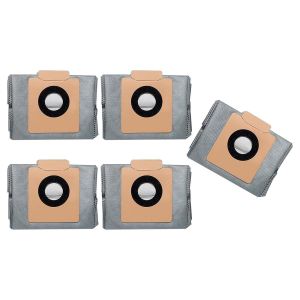
This maintenance guide comes from years of hands-on customer support for robot vacuum owners, now published here for anyone to use rather than kept inside one support inbox. Several of the models and parts named below link out to Plus.Parts®, the maintenance parts store run by the same company behind this site, and that is also where much of the experience behind this guide comes from.
A Roomba 205 that returns with a lightly dusted mop pad or stalls briefly on a rug-to-tile transition is almost always flagging a consumable past its service window rather than a software fault. The 205 platform is the first mainstream Roomba to integrate ClearView LiDAR inside the chassis rather than behind a rotating turret, and the Roomba 205 DustCompactor Combo goes further by compressing debris inside the robot itself, eliminating the self-empty dock entirely. Both choices reshape the maintenance routine in ways owners coming from a j-series Combo or an older 600-series Roomba will not have seen before. This guide covers the full schedule and explains how the two variants differ.
Why Roomba 205 Combo robots need more frequent maintenance
Onboard debris compaction changes how the bin loads
On the Roomba 205 DustCompactor Combo, a mechanical ram compresses each load of debris in the bin after every run, which is what allows iRobot to quote a 60-day empty cycle. The benefit is obvious; the trade-off is less so. Compressed debris holds moisture against the bin wall longer than loose fluff does, and fine dust that would normally rest on the filter is pressed into the filter medium at higher contact pressure. The practical consequence is that the filter on a 205 DustCompactor Combo darkens measurably faster than it does on a same-suction Roomba that simply drops debris into a loose bin. Cleaning the filter on the weekly schedule rather than monthly is the difference between keeping rated suction and letting it decline well before the filter reaches its replacement interval.
ClearView LiDAR sits inside the chassis, not above it
The 205 platform hides its LiDAR module inside the body at a height of 10.1 cm, which is what gives the robot its ability to clean under furniture that a dome-lidar Roomba would simply refuse. It also puts the LiDAR emitter and receiver closer to the dust layer that a cleaning session kicks up. A fine film on the LiDAR window produces the erratic navigation some owners report on their 205: the robot detours around empty floor, spins in place before leaving a room, or occasionally stops short of a wall it previously reached. A weekly wipe of the LiDAR window with a dry microfibre cloth is not optional on this platform in the way it sometimes is on dome-lidar models, where the emitter sits far above the dust plume.
The Multi-Surface Rubber brush pairs with a micro-pump mop
A single full-width Multi-Surface Rubber brush handles both carpet and hard-floor pickup on the 205 Combo, and the mop side uses a microfibre pad fed by a micro-pump rather than a passive gravity-drip reservoir. The rubber brush sheds hair more readily than a mixed bristle-rubber design, but end-cap wrap still develops over weeks and produces a slow drop in pickup that is harder to spot than an outright stall. The micro-pump only pushes water through the pad when the robot is cleaning on hard floor, which means mineral build-up inside the pump lines is slower than on a gravity system but concentrates over time in the pump itself. Periodic flushing of the reservoir with fresh water keeps the micro-pump running at its design flow rate.
Carpet Detect moves the mop arm every transition
The mop module on the 205 retracts the pad up and clear of the floor whenever the Carpet Detect system registers a rug beneath the robot, and drops it back down on the next hard-floor run. The arm’s pivot joint cycles with every flooring transition in mixed-flooring homes, and it collects mop-pad lint and stray floor grit at the hinge. A stiff or partially obstructed hinge does not retract the pad fully, which can leave a faint damp trail at the rug edge. Monthly attention to the arm pivot keeps the lift and drop action crisp.
Models in this series compared
| Model | Suction | Mop system | Dock | Debris handling |
|---|---|---|---|---|
| Roomba 205 Combo Black |
7,000 Pa | Micro-pump microfibre flat pad | Charging dock | Manual bin empty |
| Roomba 205 Combo White |
7,000 Pa | Micro-pump microfibre flat pad | Charging dock | Manual bin empty |
| Roomba 205 DustCompactor Combo |
7,000 Pa | Micro-pump microfibre flat pad | Charging dock | Onboard DustCompactor, up to 60 days |
Standard 205 Combo
The Roomba 205 Combo Black and Roomba 205 Combo White share the ClearView LiDAR chassis, the Multi-Surface Rubber brush and the micro-pump mop module, and differ only in colour. Both return to a charging dock, so daily bin emptying is an owner-side task. The bin sits just above the suction chute, and carrying a loose-fill bin to the waste bin once per run is the routine most owners establish after the first week. Filter service on this variant is driven by airflow rather than by compaction pressure, so the filter loads more gradually than it does on the DustCompactor variant.
205 DustCompactor Combo
The Roomba 205 DustCompactor Combo, sold in Europe as l121040 in black and l121240 in white, adds a mechanical compacting ram that crushes debris against a rear wall after each run. The extended empty interval changes the owner experience significantly, but the maintenance set itself is the same. What differs is the pacing of filter care, since compaction drives fine particulate more firmly into the filter medium than loose-fill debris does.
Replacement parts and service intervals
Main brush roll
The Multi-Surface Rubber brush on the 205 platform clears hair more cleanly than a mixed bristle brush, but the end caps still accumulate wrap over time and the bearings hold fine grit. Clear visible hair from the brush and both end caps weekly, and inspect the end-cap bearing holes for dust build-up at the same time. Replace every six to twelve months, with the earlier end of that range appropriate for daily use in pet households and the later end for vac-only use in small flats. A brush that no longer sits flush in its cradle after cleaning, or that wobbles as it spins by hand, is past replacement regardless of age. The brush is also available as its own single part for each variant in the range. Roomba 205 Combo Black , Roomba 205 Combo White, Roomba 205 DustCompactor Combo, and the European l121040 and l121240 variants all use the identical brush design, so the single part fits every model in this guide.
High-efficiency filter
The 205 filter is the single consumable most affected by the platform’s design choices, and its replacement interval reflects airflow rather than filter medium life, with the specific window varying by variant as described below. Tap the filter firmly over a waste bin on both sides every one to two weeks. Do not wash it in water, even though the filter medium looks washable, as water collapses the pleats and reduces captured air flow. On the Roomba 205 DustCompactor Combo, the compaction cycle drives fine dust into the filter at higher pressure than a loose bin would, so plan the replacement at the three to four month mark rather than stretching to six months. On the standard Roomba 205 Combo Black and Roomba 205 Combo White, four to six months under residential daily use is realistic. An individual filter is not yet listed as its own separate part for any model in this range, so each model name above links to the full Maintenance Set, which already includes the filter.
Edge-Sweeping side brush
The Edge-Sweeping brush sits outboard on the right side of the robot and pulls debris from along skirting boards and into the path of the main brush. Inspect the hub weekly and clear any wrapped hair with a fine-tip toothpick or small scissors. Bristle tips that have curled permanently downward no longer lift debris into the brush chamber; they sweep it laterally instead, which is the most common reason owners report persistent dust lines along walls on an otherwise well-cleaned room. Replace every three to six months; homes with long hair or high pet shed should plan for three months, vacuum-only homes can stretch to six. The Edge-Sweeping brush is not currently sold as its own separate part on the Roomba 205 Combo Black, the Roomba 205 Combo White, the Roomba 205 DustCompactor Combo, the l121040, or the l121240; on every model in this range it is included only within the full Maintenance Set.
Microfibre mop pad
The 205 uses a washable microfibre pad that iRobot rates for roughly thirty wash cycles before fibre compaction reduces scrub effectiveness. Rinse the pad under running water after every mop session and wring firmly. Machine-washing is acceptable on a cold wash without fabric conditioner; conditioner coats the microfibre and sharply reduces water absorption. Inspect at eight weeks for matted fibre or stiffness after washing, and replace when either appears. A compacted pad spreads soiling rather than lifting it, and is also the cause of streaks that look like they are coming from the mop arm itself. The mop pad is not yet listed as its own separate part on the Roomba 205 Combo Black, the Roomba 205 Combo White, the Roomba 205 DustCompactor Combo, the l121040, or the l121240 either; on each of these models it is included within the full Maintenance Set.
Bin and filter seals
Whether the robot has the DustCompactor or the standard bin, the seal around the filter frame and the bin access door collects fine dust at every empty. Wipe the sealing surfaces with a dry cloth monthly. A compromised seal allows a small bypass stream of dusty air to reach the motor without passing through the filter, which shortens motor life and sends fine dust back into the room through the exhaust vent. The DustCompactor variant also needs the compaction ram area wiped at every empty rather than monthly, as the ram edges pick up a film of compressed material that accumulates if left.
Charging dock contacts
Both variants of the 205 dock on a simple charging base. Wipe the contacts on the dock and on the underside of the robot monthly with a dry cloth. Oxidised or dusty contacts cause intermittent charging errors that present to the owner as a robot that starts a run and fails to complete it, which is easy to mistake for a battery fault when the cause is actually a contact film.
Battery
The Roomba 205 Combo Black, Roomba 205 Combo White, and Roomba 205 DustCompactor Combo run on a lithium iron phosphate cell, which iRobot rates for a longer cycle life than standard Li-ion packs in older Roomba generations. Under typical daily-use conditions the battery delivers reliable runtime for two to three years before capacity degrades noticeably. The replacement signal is behavioural: when the robot can no longer complete a cleaning area it previously finished on a single charge, and the companion app confirms the battery is fully charged, the cell is past its effective service life. Keeping the dock contacts and the robot-side contacts free of oxidation is the single most effective way to protect battery longevity; a resistive contact film causes the pack to accept a partial charge rather than a full one, which compresses apparent capacity without any actual cell degradation.
Maintenance at a glance
| Component | Clean | Replace |
|---|---|---|
| Multi-Surface Rubber main brush | Weekly, end caps included | Every 6 to 12 months |
| High-efficiency filter (205 Combo) | Every 1 to 2 weeks | Every 4 to 6 months |
| High-efficiency filter (205 DustCompactor Combo) | Every 1 to 2 weeks | Every 3 to 4 months |
| Edge-Sweeping brush | Hub weekly | Every 3 to 6 months |
| Microfibre mop pad | Rinse after each mop session | Inspect at 8 weeks, replace at approximately 30 washes |
| Bin and filter seals | Monthly (ram area wiped every empty on DustCompactor) | – |
| LiDAR window and cliff sensors | Weekly | – |
| Charging dock contacts | Monthly | – |
| Mop arm pivot | Monthly | – |
| Battery (LFP) | Keep dock contacts clean monthly | Every 2 to 3 years or when runtime drops significantly |
Common problems and their maintenance causes
Robot navigates erratically or refuses to leave the dock
Because the 205 platform uses an integrated ClearView LiDAR module rather than a rotating turret, a fine film of dust on the LiDAR window causes false readings. Wipe the LiDAR window with a dry microfibre cloth. If the issue persists, check the underside cliff sensors for dust accumulation. This symptom is specific to the 205 family and is one owners transitioning from dome-lidar Roombas will not have seen before; the fix is mechanical cleaning, not an app reset.
Suction drops after a few weeks of use
At 7,000 Pa, a loaded filter produces a noticeable step-change in pickup rather than a gradual decline. Remove the filter and tap it firmly on all sides; if the medium has shifted from white to mid-grey, replace rather than tap-cleaning. On the Roomba 205 DustCompactor Combo specifically, also inspect the compaction chamber for a caked layer on the rear wall, which can happen if damp debris is compressed and left for weeks. Wipe the chamber with a dry cloth after emptying.
Damp streaks or faint lines at rug edges
The mop arm is not fully retracting when Carpet Detect registers a rug. Turn the robot over and manually lift the mop pad carrier through its full range of motion; if movement is stiff or uneven, wipe the arm pivot hinge and the guide rails with a dry cloth. A monthly service of the pivot keeps the lift and drop crisp. If movement is free and streaks persist, the pad itself is saturated or past its useful life; rinse and wring firmly, and if the pad feels stiff after drying, replace it.
Dust compactor jams on the DustCompactor Combo
The compaction ram occasionally catches on an object too rigid to compress, most often a small piece of plastic or a hair tie that the filter would normally stop. The robot will report a bin error and halt. Open the bin, remove the obstruction and wipe the ram face with a dry cloth, checking for a compressed-material film and clearing it before closing. Persistent jams on the l121040 or l121240 without a visible obstruction are a warranty-service case rather than a user-fix.
Side brush drops debris trail along wall edges
The Edge-Sweeping brush tips have curled permanently from heat or wear. Bristles that no longer angle outward flick debris sideways instead of lifting it into the main brush path. Replace the side brush; tap-reshaping the bristles does not restore the angle they were moulded to hold. Also check the hub for wrapped thread or long hair, which applies hidden drag that slows the brush below its design rate.
Robot intermittently fails to complete a run
On both 205 variants, a charge-cycle interruption mid-run most often traces to oxidised dock contacts or dusty robot-side contacts, not to battery age. Wipe both contact sets with a dry cloth monthly. If contact cleaning does not resolve the issue, check the LFP battery report in the companion app; LFP cells have a longer cycle life than standard Li-ion but are more sensitive to repeated deep discharge, which can happen if a marginal contact film trickle-drains the pack overnight.
Persistent damp smell from the mop pad or bin
A microfibre pad that has been stored wet, or a bin that has compressed damp debris, both grow odour over time. Rinse the pad after every mop session and dry it flat rather than folded. For the Roomba 205 DustCompactor Combo, empty the compacted block before it dampens, particularly in humid months. The compactor is designed for dry domestic dust, not damp food residue or pet accidents, and holding moist debris for the full 60-day interval is the most common source of a damp smell on this variant.
What consistent maintenance protects over time
The 205 platform runs its subsystems in a short chain. Air moves from the brush chamber through the bin and filter to the motor and out the exhaust. Water moves from the reservoir through the micro-pump to the pad. Debris moves from the brush chamber into the bin and, on the DustCompactor variant, onward to the compaction chamber. Each step depends on the previous one being in good condition. A loaded filter raises the motor’s current draw, which increases heat at the motor bearings and shortens its service life. A clogged micro-pump dries the pad mid-run, which forces the robot to grind a dry pad across soiled floor and compresses the microfibre faster than design. A compacted bin that has not been emptied for the full 60 days transfers fine dust into the filter under ram pressure, shortening the filter’s effective life below the three-month mark.
The Plus.Parts® Maintenance Set covers the full service scope for iRobot Roomba 205 Combo and 205 DustCompactor Combo robots in a single order, with the high-efficiency filter, the Multi-Surface Rubber main brush, the Edge-Sweeping side brush, and the microfibre mop pad. It is a direct functional alternative to the original iRobot consumables for this maintenance set. Keeping one complete set in reserve means a brush end-cap tear or a flattened mop pad does not stretch the interval between cleans while a replacement ships.
How the Roomba 205 Combo models differ
The 205 family shares a common chassis, suction platform, brush system, mop module, and maintenance set. The difference between variants is in debris handling and colour finish, not in consumables. Each variant is worth understanding on its own terms because the maintenance pacing shifts slightly between them.
Standard 205 Combo variants
The Roomba 205 Combo Black and Roomba 205 Combo White are identical in function and differ only in finish. Both run the Multi-Surface Rubber main brush, the Edge-Sweeping side brush, the micro-pump microfibre mop pad, and the integrated ClearView LiDAR navigation module. Bin emptying is a daily owner-side task, and the filter replacement window of four to six months applies because debris sits loose in the bin rather than being compressed against the filter medium. Both dock on a simple charging base without auto-empty or mop-wash functions.
The Roomba 205 DustCompactor Combo adds the mechanical compaction system, which pushes the empty interval to a manufacturer-quoted 60 days under typical household debris loads. In Europe it ships as l121040 in black and l121240 in white. Two maintenance shifts follow from the compaction design. The filter cycles faster at three to four months because ram pressure drives fine particulate into the medium, and the ram area needs a wipe at every empty rather than the monthly cadence that applies to the standard bin. The rest of the maintenance schedule (main brush, side brush, mop pad, LiDAR window and dock contacts) matches the standard 205 Combo on the same intervals.
Type reference
| Type | Alternative type | Retail type |
|---|---|---|
| 4837322 | – | – |
| 4849902 | – | – |
| 4849957 | – | – |
| 4849958 | – | – |
| 4849965 | – | – |